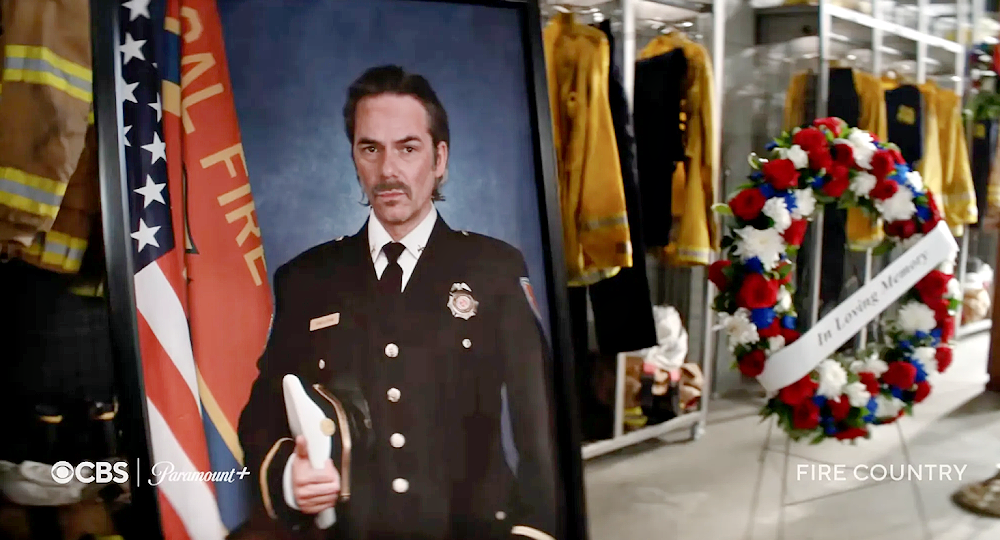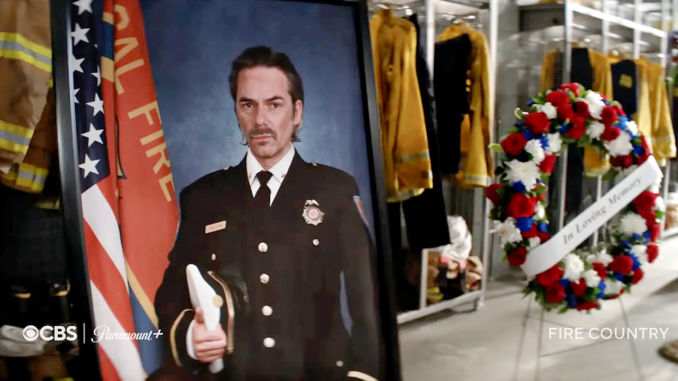
The death of Vince Leone marks one of the most devastating turning points in Fire Country, delivering an emotional blow that reshapes the series at its core. More than a shocking plot twist, Vince’s passing represents the collapse of a pillar — a father, a firefighter, and a symbol of hard-earned integrity in a world built on second chances.
From the beginning, Vince stood as a complicated force in the story. As Bode Leone’s father, he embodied discipline, expectation, and emotional distance. Their relationship was defined by unspoken disappointment and buried love, creating a tension that simmered beneath every interaction. Vince wasn’t an easy man, but he was a principled one — someone who believed that accountability mattered, even when it hurt the people he loved most.
When Vince dies, the moment lands with brutal weight. The show resists melodrama, choosing instead to let silence, shock, and raw grief carry the scene. His death feels sudden yet inevitable, the culmination of years spent putting duty above self-preservation. Vince dies as he lived — committed to doing the right thing, even at great personal cost.
The aftermath is where the true impact unfolds. For Bode, Vince’s death becomes a breaking point. Regret floods in: words left unsaid, forgiveness delayed too long, reconciliation that now feels incomplete. Yet that pain also becomes fuel. Vince’s legacy — his insistence on responsibility, restraint, and honor — begins to live on through the very son he struggled to understand.
The loss reverberates beyond the Leone family. Within the fire community, Vince’s absence leaves a leadership void and an emotional scar. He was a steady presence, someone others relied on even when they disagreed with him. His death forces the remaining characters to confront the fragility of their world, where bravery does not guarantee survival and good intentions don’t always lead to happy endings.
What makes Vince’s death so powerful is that it doesn’t offer closure — it offers consequence. Fire Country uses this loss to underscore one of its central themes: redemption is meaningful precisely because time is limited. You don’t always get another chance to say the right thing, to forgive, or to change.
In losing Vince Leone, Fire Country loses more than a character. It loses a moral counterweight — and in doing so, challenges everyone left behind to carry that weight forward. His death doesn’t just end a chapter; it ignites a new, more sobering phase of the story, one defined by legacy, responsibility, and the cost of standing in the fire for too long.