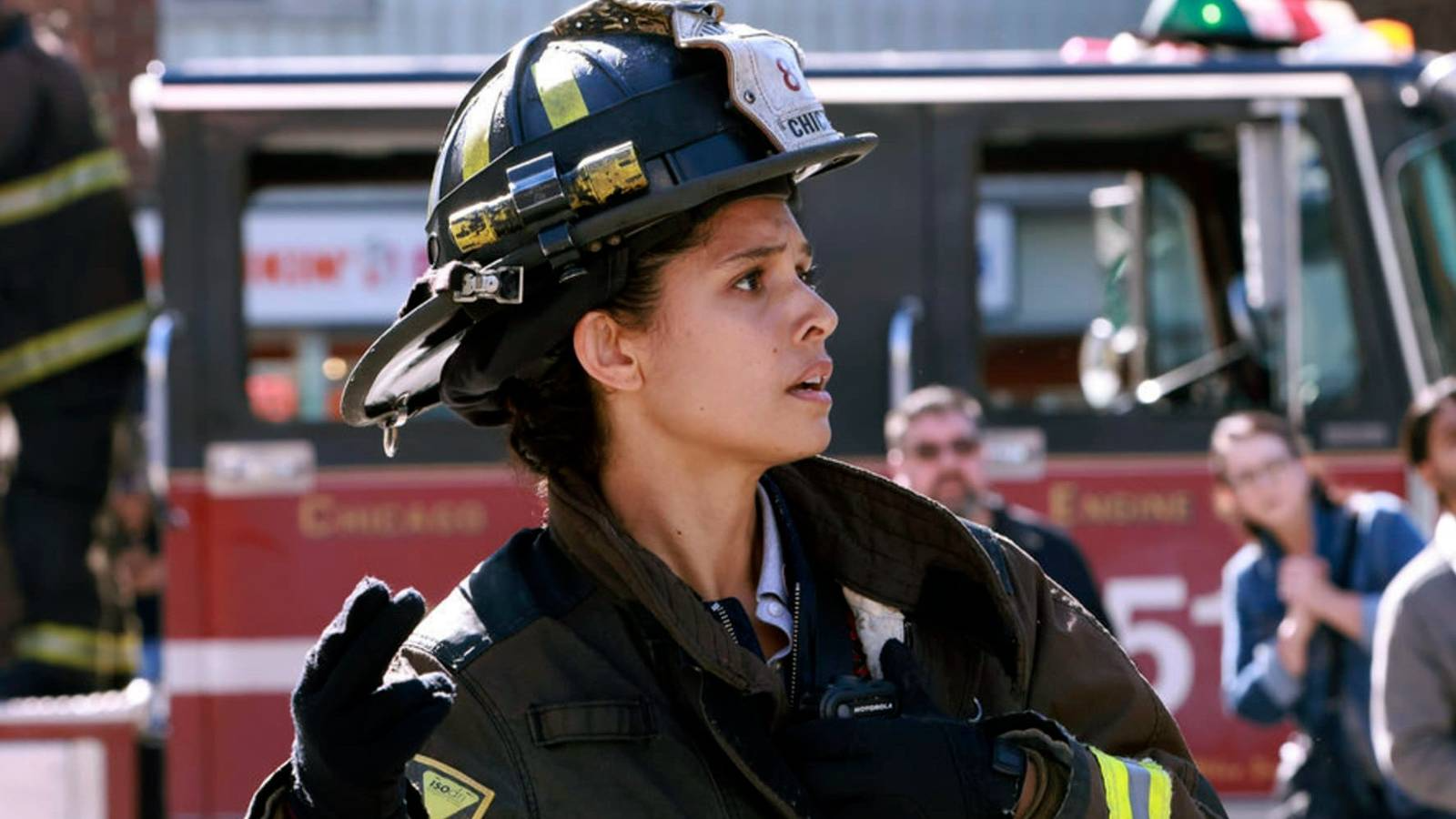
As Chicago Fire enters its long freeze until 2026, the series finds itself grappling with a character challenge it can no longer afford to ignore: Stella Kidd’s stalled, increasingly inconsistent storyline. Once one of the show’s most dynamic, inspiring, and sharply written characters, Kidd has struggled in recent seasons under the weight of disjointed arcs, repetitive conflicts, and leadership plots that haven’t allowed her personality to shine. Now, with the extended break ahead, 2026 represents the show’s final, crucial chance to fix the Stella Kidd problem before long-term fan frustration becomes irreversible.
For years, Kidd was a standout—fearless on calls, emotionally grounded, fiercely loyal to the Firehouse 51 family, and a character whose ambition felt natural and well-earned. Her rise from candidate to lieutenant was one of the most empowering arcs in the series. But the moment she reached that peak, the writing seemed to lose its direction. Instead of exploring the nuance of a woman navigating leadership in a high-pressure environment, the show repeatedly pushed her into manufactured tension, unnecessary friction with colleagues, and storylines that made her seem stretched thin or uncharacteristically unsure of herself.
The issue wasn’t Kidd’s ambition—fans overwhelmingly embraced that. The issue was how her storyline shifted from organic growth to uneven conflict. Her relationship with Severide, once one of the show’s biggest emotional anchors, has also suffered from inconsistent writing. Instead of showing two strong leaders balancing love and duty, the show has leaned on abrupt separations, unresolved arguments, and plot-driven distance. Viewers who once rooted passionately for Stellaride now feel disconnected from a relationship that used to elevate both characters.
Now, the pause until 2026, though frustrating for fans, offers a rare window for the writers to reassess what made Stella Kidd compelling in the first place. The show can restore her confidence, her heart, and her fire by grounding her in authentic leadership challenges, reconnecting her with 51’s camaraderie, and giving her personal arcs that feel earned rather than forced. Most importantly, Kidd needs space to breathe—moments that allow viewers to see her vulnerability, strength, humor, and grit without rushing her from crisis to crisis.
If Chicago Fire hopes to carry Stella Kidd into its next era with the same power she once held, the fix must come soon. The character isn’t broken—but she’s been mishandled. And 2026 may be the show’s last real chance to bring her back to the version fans fell in love with: a leader, a fighter, and a woman whose presence made Firehouse 51 feel stronger. The clock is ticking, and Stella Kidd deserves a comeback worthy of the character she once was.