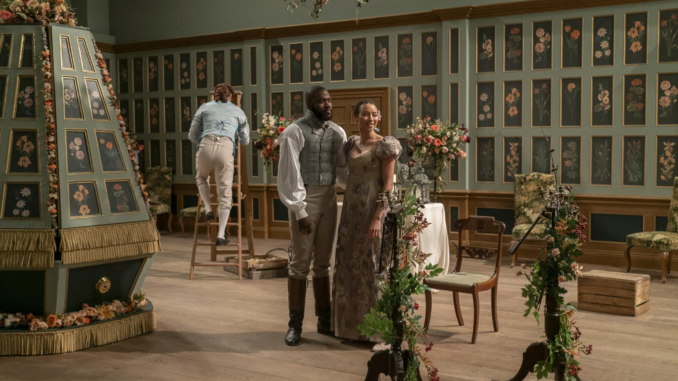
Few television series have captured the grandeur, glamour, and scandal of Regency-era London like Bridgerton. Fans may marvel at the glittering ballrooms, elegant costumes, and intricate social dances, but what goes on behind the scenes is often far more dramatic—and sometimes even chaotic—than viewers could imagine.
The production design alone has been described by crew as “a monumental feat.” Every set, from the opulent Bridgerton estate to the intricate streets of London, was meticulously constructed, often requiring weeks of planning and coordination. Crew members have revealed that replicating period-accurate details—everything from the placement of candlesticks to the angle of a chair—was an obsession that drove both designers and directors to the brink. Even minor misplacements could disrupt the continuity of scenes, forcing multiple takes and testing the patience of the cast.
Costumes were equally ambitious. Lead actors reportedly spent hours in fittings to ensure every gown, jacket, and accessory reflected both historical authenticity and character development. Phoebe Dynevor herself became intimately involved in choices that would reflect Daphne’s transformation from innocent debutante to confident woman. The attention to detail extended to hair, jewelry, and even gloves—every accessory considered a storytelling device. Sources say that actors occasionally clashed with designers over practicality versus aesthetics, resulting in heated but ultimately creative discussions that enhanced the visual storytelling.
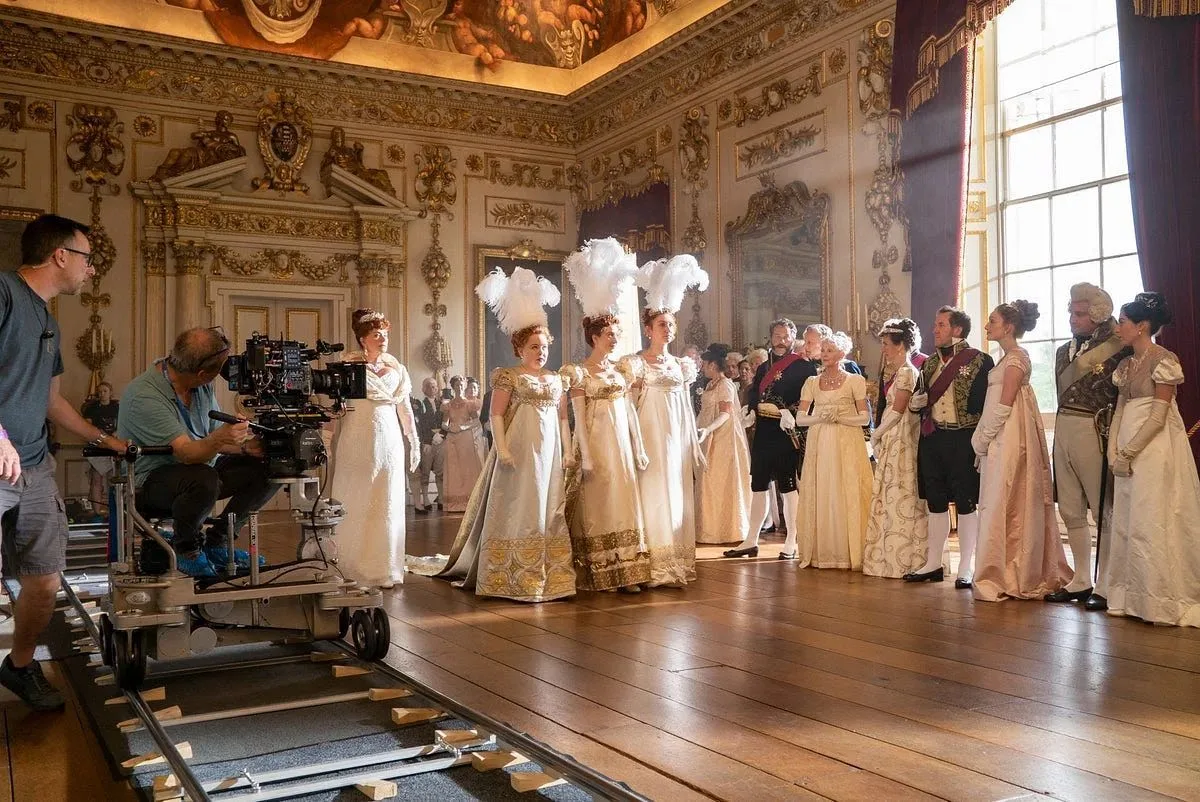 Dance sequences added another layer of complexity. Choreographers worked tirelessly to teach Regency-era court dances to a cast that had varying levels of experience. Rehearsals were intense, often requiring early mornings and late nights. Regé-Jean Page and Dynevor reportedly spent hours refining hand placement, posture, and subtle gestures to ensure the scenes felt elegant yet natural. One insider revealed that the actors sometimes suffered bruises and sore muscles from long takes, emphasizing the physical demands hidden behind the romantic facade.
Even the social dynamics of the cast contributed to behind-the-scenes drama. Off-camera rivalries, playful pranks, and clashing personalities were common during long shooting days. Certain scenes were emotionally charged, requiring multiple takes that tested the patience and endurance of everyone involved. Yet these tensions were balanced by camaraderie: the cast reportedly bonded through long rehearsals, shared downtime, and the challenges of filming in historically recreated spaces.
The technical aspects also presented challenges. Lighting had to simulate natural sunlight or candlelight without compromising the cinematography, while camera operators maneuvered through tight spaces and crowded ballrooms. Directors frequently encouraged improvisation, allowing actors to experiment with subtle movements or expressions that added authenticity. These moments, while seemingly effortless on screen, often required repeated attempts to capture perfectly.
Ultimately, the behind-the-scenes stories highlight the dedication, creativity, and stamina required to bring Bridgerton to life. The seamless on-screen elegance masks a production filled with meticulous planning, physical effort, and emotional investment. Fans may admire the glitz, but the real drama often occurred off-camera—where perfection was painstakingly crafted and relationships were tested, forming the foundation of one of Netflix’s most visually stunning and emotionally engaging series.