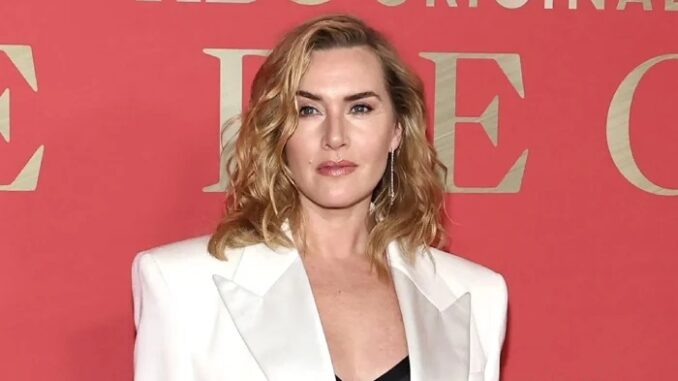
🌟 The Evolution of an Icon: Stepping Out of the Spotlight
Kate Winslet. Just the name conjures images of cinematic excellence: the fierce determination of Rose in Titanic, the heartbreaking vulnerability of Clementine in Eternal Sunshine of the Spotless Mind, and the gritty realism of Detective Mare Sheehan in Mare of Easttown. For over three decades, Winslet has commanded the screen, delivering performances characterized by their unflinching honesty and deep emotional intelligence. She is, quite simply, one of the greatest actors of her generation.
But after 33 years in front of the camera, the inevitable question always lingered: Will she ever step behind it? Directing, after all, is the ultimate form of creative control—the chance to shape the entire narrative, not just one performance within it.
Well, the answer is officially yes. Winslet has recently gotten candid about her long-anticipated directorial debut, revealing the motivations, the fears, and the deep, rich well of experience that finally pushed her to take the leap. This isn’t just a passion project; it’s the culmination of three decades spent observing, learning, and collaborating with some of the best filmmakers in history. It marks a thrilling new chapter for an artist who clearly has so much more to say.
💡 The Accumulation of Knowledge: 33 Years of On-Set Education
The most potent tool in Kate Winslet’s directorial arsenal isn’t film school or theoretical knowledge; it’s her 33 years of immersive, on-the-job training. Think about the directors she has worked with: James Cameron, Todd Haynes, Ang Lee, Michel Gondry, and Stephen Daldry, just to name a few.
The Masterclass in Collaboration
Every set Winslet has been on has served as a masterclass in filmmaking. She hasn’t just been delivering lines; she has been watching how these masters build worlds, manage massive crews, and, critically, communicate with actors.
-
Understanding the Process: Winslet knows exactly what it feels like to be on the receiving end of direction. This deep empathy for the actor’s process is arguably her greatest advantage as a debut director. She knows which cues land, which language is motivating, and which demands are unreasonable.
-
The Technical Acumen: Over the decades, she has absorbed technical knowledge by osmosis. She understands the demands of the camera, the rhythm of the edit, and the importance of sound design. Her sets have been her university, and her collaborators, her professors.
The James Cameron Influence
Winslet has spoken extensively about her long relationship with James Cameron, starting with the physically demanding set of Titanic and continuing with the technologically revolutionary Avatar: The Way of Water. Cameron’s relentless pursuit of perfection and his ability to manage chaos are likely huge influences.
Cameron taught her about scale and vision. But perhaps more importantly, he taught her about endurance—the sheer stamina required to bring a massive cinematic vision to life.
The Inner Calling: Why Now is the Time for Direction
Why, after so long, has Winslet decided to direct now? It’s often not about having the time; it’s about having the compulsion and the right material.
H3: Finding the Irresistible Story
Winslet has stated that the decision was driven by an irresistible story—one that felt too personal and too crucial to hand over to someone else.
-
The Visionary Urge: After spending a career interpreting other people’s visions, she found a narrative that only she could truly translate to the screen. Directing becomes an act of ownership, ensuring the story’s tone, message, and emotional core are protected by the person who understands them best.
-
Maturity and Confidence: Directing requires profound confidence and a thick skin. Winslet is now in a place in her career where she has the professional standing to command a set and the personal maturity to handle the immense pressure. After delivering Mare Sheehan, what else is there to fear?
H3: The Mare of Easttown Effect on Creative Control
Her experience producing and starring in the hit HBO limited series Mare of Easttown was likely the ultimate catalyst. As a producer, she gained valuable experience in the early stages of development, casting, and overall creative leadership.
-
Producing as a Stepping Stone: Producing gave her a taste of the comprehensive control a director enjoys. It showed her the business side of storytelling and proved her capacity to guide a project beyond her own performance. It was the perfect, high-level preparation for her directorial debut.
The Directorial Debut: A Peek at Her Chosen Project
While details about her first feature film remain carefully guarded, early reports suggest Winslet is choosing a project that leans into the gritty emotional realism that defines her best acting work.
Focus on Character and Authenticity
It is highly probable that Winslet’s film will be deeply character-driven, prioritizing authenticity and nuanced emotional complexity over massive visual effects.
-
Actor-Centric Approach: Given her background, her set will likely be a true actor’s environment—a place where performance and emotional safety are paramount. She will undoubtedly bring a level of respect and understanding to her cast that only a great actor can provide.
-
Thematic Resonance: Expect themes that echo her career concerns: the challenges of motherhood, the complexities of human relationships, and the search for truth beneath a veneer of normalcy.
H4: The Challenge of the Double Duty
A key question is whether Winslet will direct herself. While many actors who transition to directing do perform in their debut films, it adds a massive layer of complexity. She must be able to shift instantly from the subjective reality of the actor to the objective oversight of the director. This is a massive logistical challenge that tests even the most seasoned filmmaker.
The Vulnerability of the First Time: Acknowledging the Fear
Winslet has been remarkably candid about the vulnerability that comes with this career shift. After 33 years, she is essentially starting over in a new role.
Facing the Unknown
She has acknowledged the fear of failing and the pressure of having the entire industry watching. This is the Perplexity of her current situation—the intense scrutiny applied to every decision made by an A-list actor stepping into a brand-new role.
-
The Exposure: As an actor, she is exposed emotionally; as a director, she is exposed creatively. Her vision, her capacity for leadership, and her ability to structure a narrative will all be judged by her peers.
-
The Need for Trust: Directing is largely about communication and trust. She must now rely completely on her crew and collaborators, trusting that they can execute her vision flawlessly—a dynamic shift from her usual role as the singular visionary in front of the camera.
The Legacy of the Actor-Director: Joining an Elite Club
By taking this step, Kate Winslet joins an elite club of celebrated actors who successfully transitioned to directing, including Clint Eastwood, Greta Gerwig, and Bradley Cooper.
Her legacy is already cemented, but this move proves she is an artist hungry for new challenges and driven by a desire for total creative control. Her 33 years on set have not only prepared her; they have equipped her with a unique perspective—one that will undoubtedly enrich her storytelling and redefine her place in cinematic history. We cannot wait to see the world through her lens.
Final Conclusion
After 33 years as one of the world’s most revered actors, Kate Winslet is finally making her directorial debut, a decision she claims was driven by an “irresistible story” and the sheer compulsion to bring her own unique vision to the screen. Her extensive career, collaborating with masters like James Cameron, has served as a three-decade-long apprenticeship, providing her with invaluable insight into the technical and emotional demands of filmmaking. This pivot is not just a career change; it’s the logical next step for an artist who has accumulated vast knowledge and now seeks total creative control. Winslet’s debut promises to be deeply character-focused, emotionally authentic, and a thrilling new chapter that leverages her unparalleled understanding of the actor’s craft.
❓ 5 Unique FAQs After The Conclusion
Q1: Which major director has Winslet worked with most frequently, influencing her style?
A1: While she has only worked on two projects with James Cameron (Titanic and Avatar: The Way of Water), her intensive, demanding collaborations with him have been highly influential on her understanding of large-scale production and technical rigor.
Q2: Did Kate Winslet produce any of her previous projects before deciding to direct?
A2: Yes. Most notably, Kate Winslet served as an Executive Producer on the highly acclaimed HBO limited series Mare of Easttown (2021) and her 2024 HBO limited series, The Regime. This experience provided her with crucial creative control and management skills necessary for directing.
Q3: What kind of themes is Winslet expected to explore in her directorial debut?
A3: Given her powerful body of work, it is highly anticipated that Winslet will explore themes of complex female relationships, maternal challenges, grief, and small-town authenticity—the same themes that made Mare of Easttown such a critical success.
Q4: Has Winslet given any hints about the genre of her directorial debut film?
A4: While she has not officially announced the genre, industry speculation points toward a project in the indie drama or thriller space, leaning away from large-scale blockbusters and focusing on intimate, intense character studies, consistent with her post-Titanic career choices.
Q5: Is it common for actors to wait over 30 years to make their directorial debut?
A5: While many actors transition to directing earlier in their careers, waiting until they have accumulated such extensive experience is not uncommon, especially for high-level stars. It often signifies that the actor waited until they had enough professional stature and financial independence to direct a passion project completely on their own terms.