📽️ Hollywood’s Rose-Colored Lens: When Blockbusters Miss the Nuance
When we think of the RMS Titanic, our minds instantly conjure up James Cameron’s 1997 epic. We see the sweeping romance, the dazzling set pieces, and the sheer terror of the ship’s final hours. Cameron’s film is a masterpiece of cinematic spectacle, but like many Hollywood blockbusters, it often smooths out the rough edges of history, prioritizing dramatic flow and romantic fantasy over uncomfortable, contested truths.
But there is one specific, deeply contentious moment in the Titanic saga—a moment that highlights the class divisions and the chaos of the disaster—that Cameron largely bypassed or softened. This moment, involving the shameful fact of the half-filled lifeboats, was tackled head-on, with unflinching historical rigor, by a less-remembered, but arguably more truthful, television production: the 1996 CBS miniseries, Titanic.
We are diving into the heart of the disaster to understand why this earlier, made-for-TV version is considered by many historians and purists to be superior in depicting a pivotal, often deliberately obscured, part of Titanic history. It’s a classic case of historical accuracy triumphing over romantic escapism.
🚨 The Uncomfortable History: The Lifeboat Scandal
The most heartbreaking, frustrating aspect of the Titanic sinking is the simple, undeniable math: the ship carried enough lifeboat capacity for 1,178 people, but only 705 survived. This staggering discrepancy leads to the single most contentious historical element of the sinking: the fact that many of the available lifeboats left the doomed ship woefully, tragically under-filled.
The Great Underutilization
-
Lifeboat Capacity: The boats could have carried hundreds more people. Many left with fewer than 30 passengers, while hundreds waited on the deck.
-
The Contested Reasons: Historians cite several reasons for this failure: confusion over lowering procedures, fear that the davits couldn’t handle a fully loaded boat, and, most cruelly, the officers’ rigid adherence to the “women and children first” protocol, which paradoxically led to boats leaving half-empty if women and children weren’t immediately present to fill them.
This wasn’t just a failure of logistics; it was a devastating failure of leadership and human compassion. And this is precisely where the CBS miniseries refused to look away.
📺 The CBS Miniseries (1996): Facing the Failure Head-On
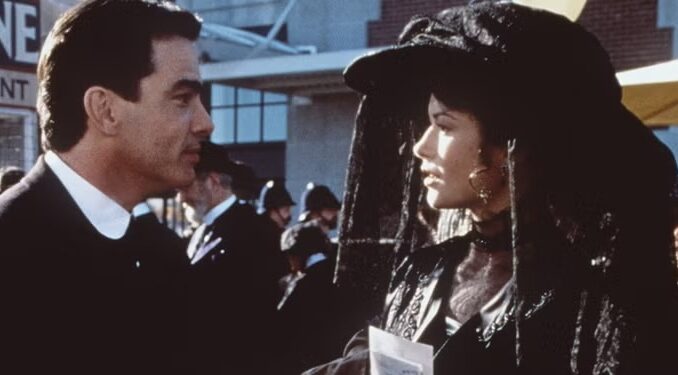
The 1996 CBS miniseries, directed by Robert Lieberman and starring Peter Gallagher and George C. Scott, was released a year before Cameron’s behemoth. While lacking the massive budget, its limited-series format allowed it to dedicate significant screen time to the procedural failures of the disaster, unlike its more famous rival.
The Unflinching Focus on the Ropes
The CBS production meticulously and repeatedly showed the tragic sight of boats being lowered with dozens of empty seats. It dedicated dialogue and action to the officers’ internal conflicts and the growing panic on the deck fueled by the realization that they were running out of time and usable space.
-
Highlighting Officer Murdoch’s Dilemma: The miniseries depicted the sheer procedural and ethical chaos faced by the officers on the starboard side, particularly First Officer William Murdoch. It showed him making frantic, flawed decisions under immense pressure, specifically wrestling with the protocols that prevented him from fully loading the boats with men once the flow of women and children stopped.
-
Exposing Cowardice and Class: Crucially, the miniseries included stark depictions of First Class passengers demanding preferential treatment and, in some cases, outright acts of cowardice to secure their spot, including one passenger jumping in disguised as a woman. This narrative choice sharply focused on the class division that exacerbated the underutilization crisis.
⭐ James Cameron’s Titanic (1997): The Romantic Softening
Cameron’s film, while a cinematic triumph, is designed primarily as a romantic tragedy. Its focus is on the journey of Jack and Rose, and the grandeur of the ship. Consequently, the lifeboat tragedy is treated as a narrative hurdle rather than a central historical failing.
Prioritizing Spectacle Over Procedure
Cameron certainly showed chaos, but the pervasive theme was the sheer speed and scale of the disaster, suggesting that the underutilization was an unfortunate byproduct of the overwhelming crisis, rather than a systemic, procedural failure.
-
Murdoch’s Controversial Scene: Cameron’s most notorious departure was the scene depicting Officer Murdoch (played by Ewan Stewart) shooting a passenger and then committing suicide. While this was a dramatic peak, historians widely contest this depiction. More importantly, it shifts the focus from the procedural failure of the under-filled boats to an individual officer’s emotional breakdown.
-
The Jack and Rose Filter: The central focus on Jack and Rose (DiCaprio and Winslet) meant that the camera was rarely given the time to dwell on the horrific reality of the departing, half-empty lifeboats. The emotional energy was reserved for the couple’s separation, not the hundreds of nameless victims left behind due to protocol failure.
H4: The Lack of Accountability
By the end of Cameron’s film, the viewer feels heartbroken, but the moral outrage over the wasted capacity is muted. The 1996 miniseries, by contrast, made this outrage a core theme, dedicating more time to the procedural flaws that truly sealed the fate of hundreds.
⚖️ The Trial of History: Why This Depiction Matters
The way we depict history in popular media matters because, for most people, the movie becomes the history. The discrepancy between these two major productions highlights a fundamental conflict in historical storytelling.
Challenging the Myth of Perfect Heroism
The CBS miniseries dared to challenge the myth of flawless heroism and flawless procedure. It recognized that the Titanic sinking was not just a tragedy of nature but a tragedy of human system failure.
-
Class as a Character: The miniseries used the lifeboat loading scenes to make class division a central, active antagonist. The cold reality that social hierarchy dictated who got a chance at survival—and who didn’t, even if seats were available—was laid bare.
-
The Procedural Flaws: By showing the officers struggling with the capacity limits and the fear of fully loading the boats, the miniseries provided a crucial, uncomfortable lesson: the disaster was compounded by rigid, untested rules that collapsed under the pressure of reality.
📝 The Format Advantage: Miniseries vs. Blockbuster
The format itself gave the CBS miniseries a decisive advantage in handling this dense, procedural history.
The Luxury of Time and Detail
A four-hour miniseries has the luxury of time. It can slow down, dedicate entire segments to procedural details (like the confusing lifeboat numbers), and delve into the political and class dynamics.
-
Blockbuster Constraints: Cameron’s three-hour film had to keep the pace moving to maintain the blockbuster tension. Lengthy, detailed scenes showing officers debating davit strength or counting available women wouldn’t serve the immediate dramatic needs of the Jack and Rose storyline. The miniseries had the scope to allow historical accuracy to breathe alongside the drama.
🧭 Finding the True North of the Tragedy
Ultimately, the power of the 1996 miniseries lies in its willingness to show the truth that sits at the center of the Titanic tragedy: that over 1,500 people died not just because of an iceberg, but because of a massive, systemic failure that rendered hundreds of available seats useless. The “extraordinary” human response captured in the miniseries was not just terror but the devastating recognition that they had the capacity to save more, and yet, they failed. It is a necessary, painful truth that deserves its place in the historical narrative.
Final Conclusion
The 1996 CBS miniseries, Titanic, surpassed James Cameron’s cinematic masterpiece in depicting the most contested and heartbreaking part of the Titanic disaster: the underutilization of the lifeboats. While Cameron prioritized the romantic spectacle, the miniseries utilized its longer runtime to focus unflinchingly on the procedural failures, class divisions, and rigid protocols that caused lifeboats to leave woefully under-filled, sealing the fate of hundreds. The CBS version offered a more sobering, historically accurate, and emotionally infuriating account of the failure of system and leadership, a crucial component often softened by Hollywood’s desire for clean narrative arcs.
❓ 5 Unique FAQs After The Conclusion
Q1: Why were officers afraid to fully load the lifeboats during the Titanic sinking?
A1: Officers feared that the davits (the cranes used to lower the boats) were not strong enough to handle the weight of a fully loaded boat (designed for 65+ people). Many boats were lowered only half-full to be safe, with the intention of filling them from gangway doors lower down, a plan that failed due to the ship listing quickly.
Q2: Which film’s depiction of First Officer Murdoch’s actions is considered more historically accurate?
A2: Most historians reject the dramatization in Cameron’s film of Murdoch shooting a passenger and then himself. The 1996 miniseries, which focused more on his procedural struggles and attempts to maintain order under pressure, is generally considered closer to the historical confusion and chaos surrounding the officers’ decisions.
Q3: What was the actual capacity discrepancy of the lifeboats on the Titanic?
A3: The Titanic carried 20 lifeboats with a combined capacity of 1,178 people. Since the ship carried 2,224 people, it only had enough capacity for about half the souls onboard. However, the tragedy is that even that limited capacity was not utilized, as only 705 people ultimately survived in the boats.
Q4: Did the 1996 CBS miniseries and the 1997 James Cameron film compete at the same time?
A4: The 1996 CBS miniseries was a two-part event that aired in November 1996. James Cameron’s theatrical film premiered over a year later, in December 1997. They did not compete at the box office, but the miniseries set a precedent for the disaster’s depiction.
Q5: Did any passengers attempt to jump onto the departing, half-filled lifeboats, as depicted in the miniseries?
A5: Historical accounts confirm that there was chaos and desperation, including reports of some men jumping into boats from the deck or even from the water, often at the stern of the ship. The CBS miniseries highlighted the ethical compromises made by some passengers to secure a spot in the under-filled boats.