
Television is a vast landscape filled with cultural touchstones—series that, for one reason or another, become part of the collective conversation. From The Sopranos to Breaking Bad to The Wire, there are shows that dominate “best of all time” lists, even though many viewers haven’t seen a single episode. It’s a familiar reality: our personal tastes don’t always align with the broader cultural wave.
For years, Blue Bloods occupied a quieter but nonetheless significant corner of the television world. It was never crowned an all-time great nor dissected endlessly by critics, yet it was a comfort-show staple for an audience that tuned in faithfully every Friday night for 14 seasons. That kind of consistency is no small achievement in an industry where even promising shows struggle to make it to a third season.
I was aware of Blue Bloods, of course. Its promos played relentlessly during other CBS staples, and I knew it had a fiercely loyal viewership. But nothing about it ever compelled me to start watching. The police procedural genre has never been my preferred form of escapism, and while I respect the dedicated fans who enjoy unraveling weekly cases, it simply wasn’t my kind of storytelling. From afar, though, even with minimal exposure, I recognized that Blue Bloods was rooted in something deeper than episodic crime-solving: family. And that is a narrative thread I’ve always appreciated, whether it’s built around found families or those bound by blood.
Still, I let the series pass me by. As the seasons stacked up, the thought of jumping into a 14-year, 275-plus-episode commitment felt overwhelming. It seemed too late to join the party.
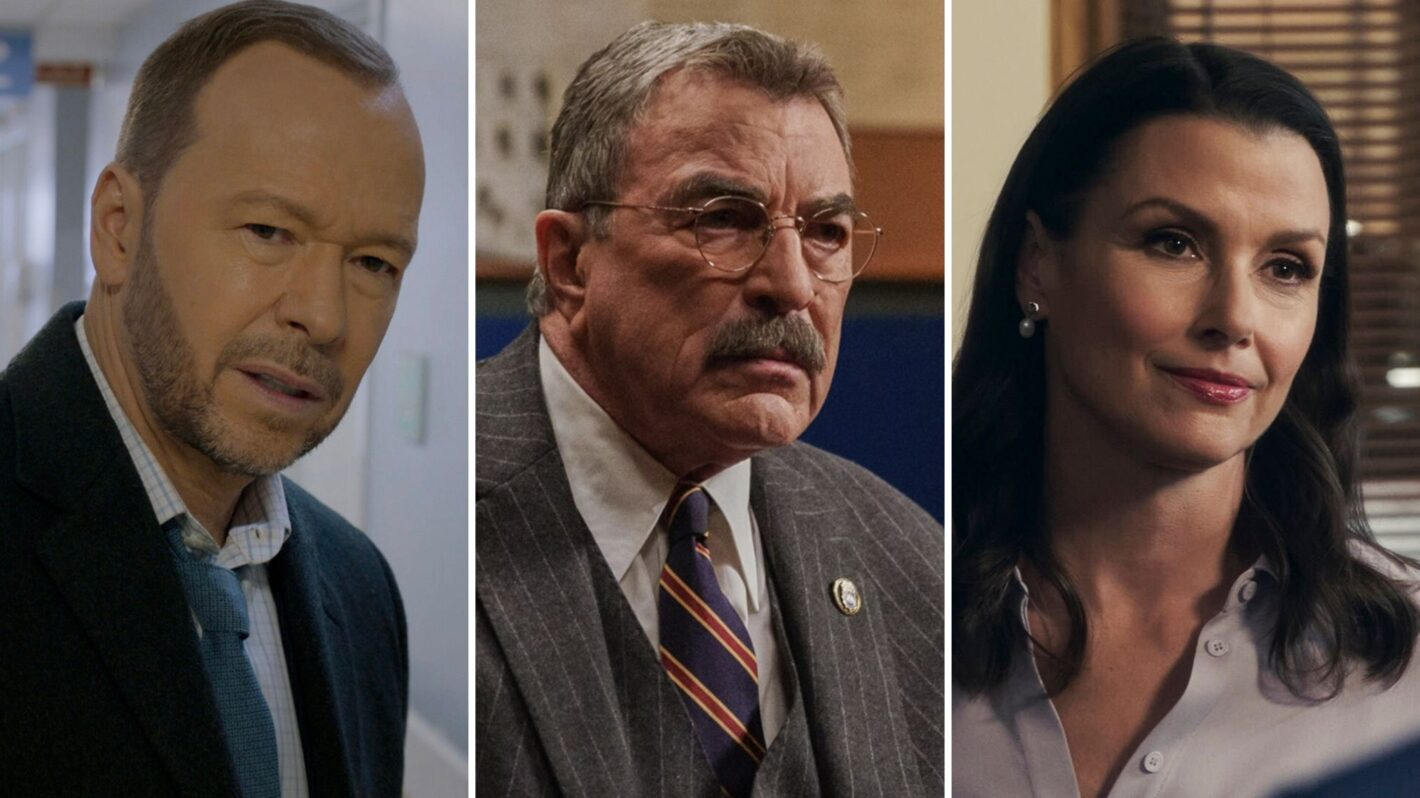 Then came fall 2025—and the arrival of Boston Blue.
From the very first promotional trailer, the series caught my attention in a way its predecessor never did. Fronted by Donnie Wahlberg and Sonequa Martin-Green, Boston Blue had an instant spark. Wahlberg returning to the universe that made him a household name was intriguing enough, but pairing him with Martin-Green—an actor I’ve admired for years—made the concept irresistible before the premiere even aired.
There was a freshness to the series that set it apart from traditional procedurals. Its energy, its diversity, and the “fish-out-of-water” narrative tone gave it a unique flavor. Wahlberg’s character leaving New York behind to start anew in Boston signaled that this wasn’t just an extension of Blue Bloods, but something that aimed to stand on its own feet without simply echoing the past.
What hooked me most was the cast, but what kept me watching week after week were the relationships and the storytelling. The heart of Boston Blue lies in the partnership between Danny and Lena—a fast-building, respectfully grounded bond that feels natural and lived-in. Their dynamic has become the emotional anchor of the series, elevating it beyond case-of-the-week formulas.
Family dynamics, too, are woven into the narrative with care. When balanced correctly, family-centered stories can be soothing, emotional, and resonant rather than melodramatic—and Boston Blue manages that balance with surprising deftness for such a new series. Not everything is perfect: the Jonah-and-Season partnership, for example, is still trying to find its footing. But the show has far more strengths than weaknesses, and its early successes suggest it will only improve as it continues to shape its identity.
Somewhere between enjoying this new world and getting invested in these new relationships, a surprising question arose: Did I miss out on Blue Bloods?
Despite never watching the original series, I’ve heard enough over the years to know that its appeal stemmed from more than law enforcement storylines. Families gathered at the iconic Reagan dinner table each week, viewers built attachments to characters across more than a decade, and the show’s longevity testified to its emotional staying power. If Blue Bloods offered the same character-first storytelling that makes Boston Blue so compelling, perhaps it was more aligned with my tastes than I had ever realized.
I’ve always been drawn to procedurals where the characters matter as much as the cases—or even more than the cases. In that sense, Boston Blue revealed something unexpected: maybe Blue Bloods, had I given it a chance, would have offered me the exact blend of emotional depth, family loyalty, and personal growth that I seek in long-form storytelling.
Of course, taking on a 14-season series is daunting. It’s a major time investment, and the sheer volume of episodes can be intimidating. But the more I watch Boston Blue, the more I understand the universe it sprang from. There is a tether—a thematic throughline, a legacy of emotional storytelling—that connects the two series. And that connection is strong enough that, for the first time, I’m genuinely considering diving into Blue Bloods from the beginning.
That decision speaks volumes not just about Boston Blue’s early achievements but also about the lasting impact of the Blue Bloods universe. In an era where reboots, spinoffs, and franchise extensions often feel unnecessary or uninspired, Boston Blue has managed to carve out its own identity while honoring the spirit of its predecessor. It stands as proof that a continuation can succeed not by replicating the original formula but by adapting it to new voices, new dynamics, and new emotional layers.
In the end, Boston Blue hasn’t just earned its place in the current television lineup—it has also breathed new life into the legacy of Blue Bloods. For a viewer like me, who once stood firmly outside the fan base, that is no small feat. And perhaps, after all these years, it’s finally time to pull up a seat at the Reagan family dinner table.