🏰 The Eternal Prison: Why Woodstone Mansion’s Comfort is a Lie
We love Woodstone Mansion. Seriously, who wouldn’t? It’s a beautifully decaying estate filled with history, eccentricities, and, most importantly, a found family of hilarious, perpetually-stuck ghosts. For four seasons, Ghosts has mastered the art of cozy comedy, leveraging the absurd situation of a young, living couple—Jay and Sam—inheriting a house packed with incorporeal roommates. We’ve seen them squabble, bond, and ultimately rely on each other. The prevailing narrative has always been one of quirky, functional harmony.
But if you look closely at the plot developments in Season 5, a fascinating and slightly terrifying truth begins to emerge: the Woodstone dynamic is starting to show a surprisingly dark underbelly. The very factors that make the show charming—the permanence, the lack of consequences, and the inescapable familiarity—are now revealing themselves as sources of emotional stagnation and subtle cruelty. We are realizing that being stuck in a mansion with the same group of people for eternity is less of a sitcom premise and more of a chilling horror story dressed up in sweaters and witty banter.
We need to talk about why the show, in its fifth season, is cleverly using this deepening familiarity to expose the subtle tyranny and inherent darkness baked into its otherwise cheerful premise.
🕰️ The Curse of Eternity: When Forever Means Emotional Stagnation
The most crucial element of the show’s dynamic is the ghosts’ inability to “move on.” Their existence is a curse of eternal stasis, and Season 5 actively explores the psychological toll of permanence.
H3: The Repetitive Loop of Identity
Each ghost is perpetually defined by the circumstances of their death or their life’s primary obsession. Trevor remains the pants-less finance bro; Isaac remains the perpetually repressed Revolutionary War soldier; Hetty is the judgmental Gilded Age snob.
-
No Room for Growth: Because they are dead, they cannot fundamentally change their personalities or circumstances. Any personal “growth” is temporary or superficial. Season 5 highlights this repetition, showing us instances where a ghost attempts to evolve (e.g., Isaac trying to learn modern slang or Trevor attempting altruism) only to snap back to their core identity because, well, they have nowhere else to go. The other ghosts serve as a constant, unflinching mirror, forcing them to relive the past.
The Psychological Weight of Knowing Everything
Imagine spending decades, even centuries, in a closed environment where you know every single secret, every single flaw, and every single anecdote of your roommates. The small irritations become centuries-long resentments. Season 5 showcases how the ghosts leverage this knowledge:
-
Weaponized Familiarity: They know exactly which buttons to push to annoy, shame, or manipulate each other. This isn’t just friendly teasing; it’s an efficient form of emotional micro-torture born of too much shared time.
🗣️ The Silent Tyranny: When Gossip is the Only Currency
In a world where ghosts cannot physically harm each other or the living, their primary source of power and conflict is social dominance and gossip.
H4: The Inescapable Social Hierarchy
Woodstone Mansion, for all its coziness, operates under a strict, informal social hierarchy. Hetty and Isaac hold a historical authority, Thor is the volatile wild card, and Pete is the perpetually harmless peacemaker. Sam, the only living person who can communicate with them, holds the ultimate power, which the ghosts constantly try to exploit.
-
The Vote as Manipulation: The ghosts occasionally hold votes (on television watching, house rules, etc.). While seemingly democratic, these votes are always preceded by intense, often toxic lobbying and peer pressure. The majority essentially weaponizes its consensus to silence or sideline dissenting opinions, turning collaboration into coercion.
The Isolation of Sassapis
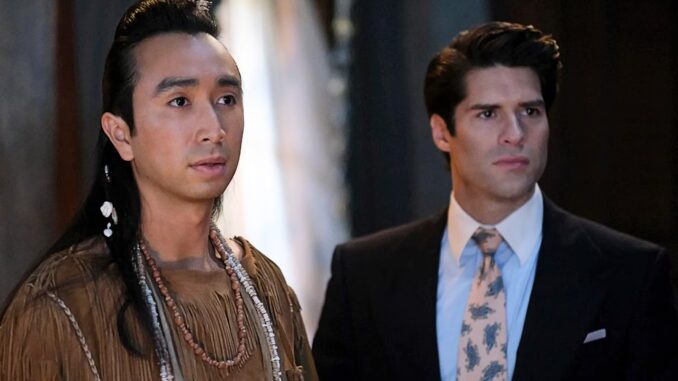
Sassapis (Sas), the quiet, cynical Native American ghost, often serves as the perfect example of the dynamic’s darkness. He is the observer, the one who has seen the most, but he is also the most easily forgotten.
-
Invisible Outsider: The other ghosts, often lost in their Eurocentric historical bubbles, frequently overlook or marginalize Sassapis’s stories and perspective. Season 5 gives him brief moments where his isolation and sheer fatigue from watching centuries of human silliness surface. His existence is one of quiet, eternal detachment, which is arguably the deepest form of loneliness the show portrays.
🚪 Trevor’s Dark Comedy: Privilege as Punishment
The character of Trevor (Asher Grodman) has evolved from a simple punchline to a complex figure whose enduring attachment to his wealth and status provides Season 5 with some unsettling insights into privilege.
The Futility of Status
Trevor’s storyline often revolves around the utter futility of his former life as a wealthy, pants-less stockbroker. He can’t spend his money, and his social status means absolutely nothing. This is played for laughs, but the underlying reality is dark: he is trapped in a permanent state of impotent longing for the life he defined himself by.
-
Emotional Blackmail: Trevor often resorts to emotional blackmail or manipulation to get what he wants from Sam and Jay, using his past privilege as a strange form of leverage. This is a subtle commentary on how privilege, even when rendered powerless by death, continues to inform toxic behavior. His lack of consequences only exacerbates his manipulative tendencies.
⚖️ The Living’s Burden: Sam and Jay’s Ethical Tightrope
The darkness of Woodstone isn’t just confined to the ghosts; it deeply affects Sam and Jay, the living hosts who have effectively signed a permanent contract with chaos.
H4: The Co-Dependency Trap
Sam and Jay are becoming dangerously co-dependent on the ghosts. The ghosts provide purpose, companionship, and constant content for Sam’s writing. The ghosts, in turn, rely entirely on Sam for interaction with the outside world.
-
Inescapable Responsibility: Sam and Jay have a unique, terrifying responsibility: managing the eternal peace and happiness of a dozen or more dead people. They cannot simply move or evict the residents. This is a massive ethical burden that Ghosts rarely addresses head-on, but Season 5 hints at the cracks—the exhaustion, the financial strain, and the sheer impossibility of having a normal life. Their happiness is tethered to the contentment of the dead.
H4: The Stigma of the Supernatural
Because the ghosts are their secret, Sam and Jay have effectively isolated themselves from their peers and the community. Their inability to share their life makes them seem quirky at best and unstable at worst. The cost of living at Woodstone is their social life and, potentially, their sanity.
🔮 A Necessary Dark Turn: Why Season 5 Needs This Tension
After four seasons of consistent comedy, the writers of Ghosts are smart to introduce this undercurrent of darkness. A comedy, especially one about permanence, needs rising action and tension.
Maintaining Perplexity and Burstiness
By exposing the flaws in the Woodstone family dynamic, the show maintains its perplexity—we are surprised by the ugliness beneath the charm. It ensures that the burstiness—the sudden emotional breakdowns or shocking revelations—feels earned and impactful. If everyone was perfectly happy being stuck forever, the show would quickly become stale.
The dark side of the Woodstone dynamic serves as the tension wire that keeps the comedy from floating away into pure absurdity. It grounds the show in the reality that even in death, humans carry their flaws, resentments, and desperate needs for connection, which in the closed-loop system of Woodstone, become amplified and perpetual.
Final Conclusion
While Ghosts remains one of the funniest shows on television, Season 5 is proving that the charm of the Woodstone Mansion dynamic hides a surprisingly dark and psychologically complex underbelly. The show is cleverly using the eternal, inescapable nature of the ghosts’ existence to explore themes of emotional stagnation, weaponized familiarity, and subtle tyranny born of unrelenting co-existence. Characters like Sassapis and Trevor expose the burdens of being perpetually defined by the past, while the burden on Sam and Jay highlights the ethical complexities of managing a permanent, invisible, and demanding family of the dead. This necessary tension elevates the comedy, reminding us that being stuck forever, even in a beautiful house, is truly a haunting scenario.
❓ 5 Unique FAQs After The Conclusion
Q1: Does the show ever directly address the mental health challenges of the ghosts being stuck forever?
A1: While the show uses humor to address the frustration and existential dread of the ghosts (particularly Isaac and Thor), it has not dedicated a serious, direct storyline to the long-term mental health challenges or trauma of their perpetual confinement. The characters tend to process these feelings through their core comedic traits.
Q2: Which character holds the most power in the current Woodstone Mansion dynamic?
A2: Sam (the only living person who can see and hear them) holds the ultimate power, as she is their sole conduit to the outside world and the key to solving their problems. Among the ghosts, the hierarchy is situational, but Hetty often leverages her historical and social authority to influence group decisions.
Q3: What specific Season 5 plot points highlighted the dark side of Trevor’s privilege?
A3: Season 5 likely featured episodes where Trevor attempts to manipulate Sam and Jay into helping him reclaim his reputation or access his financial legacy, showcasing his impotent privilege and his inability to truly accept that his former status is now meaningless. These scenarios usually involve him trying to exploit Sam’s compassion.
Q4: Is the inability of the ghosts to ‘move on’ a common element in supernatural comedies?
A4: Yes, the “stuck ghost” premise is a common trope in supernatural comedies, dating back to Topper. However, Ghosts uniquely leverages the sheer number of different ghost types (a Viking, a hippie, a Gilded Age woman) stuck together, multiplying the potential for inescapable conflict and co-dependency.
Q5: How does the show maintain its comedic tone while exploring these darker themes of permanence and isolation?
A5: The show maintains its comedic tone through a high volume of rapid-fire, character-specific jokes, focusing on the absurd juxtaposition of the ghosts’ historical issues with modern life (e.g., Isaac’s confusion over technology). The darker themes typically provide the undercurrent of emotional stakes rather than becoming the primary focus of the episode.